Guides / Specification
US retail shrimp labels: what the origin, farm-raised and net weight statements must say
November 10, 2026
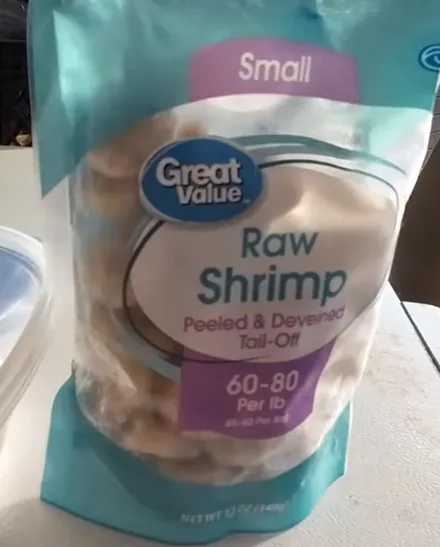
A retail bag of raw shrimp sold in a US store has to carry four statements from four different rules: the country of origin and the farm-raised or wild designation (USDA), the species and allergen wording (FDA), the net weight (FDA) and, behind them all, the origin marking that US Customs and Border Protection (CBP) requires at import. Different parties owe each one, and most label problems come from one party assuming another one handled it. This guide sets out what each rule asks of a bag of Vietnam shrimp, who is liable and what a buyer should write into the specification so the retailer can sell the product.
The four layers on one bag
| Layer | Rule | What it asks | Who carries it |
|---|---|---|---|
| Import marking | 19 U.S.C. 1304, 19 CFR 134.11 | The English name of the country of origin, marked conspicuously, legibly, indelibly and permanently, so the ultimate purchaser can read it | Importer of record, with the plant printing it |
| Retail origin and method | 7 CFR Part 60 (COOL) | Country of origin plus farm-raised or wild, at the point of sale | Retailer, supported by every supplier in the chain |
| Name and allergen | FD&C Act 403(w), FDA allergen guidance | The species named, crustacean shellfish declared as shrimp | Packer or label owner |
| Net quantity | 21 CFR 101.7 | Net weight on the principal display panel in US units | Packer or label owner |
The first two sound alike and are not. The CBP rule is about the article entering the country. The USDA rule is about what the shopper sees at the shelf, and the notice is the retailer’s duty. A plant that prints “Vietnam” on the bag satisfies the first and usually helps with the second, but it does not by itself give the retailer the production method.
Customs marking: Vietnam, in English, on the pack
Section 304 of the Tariff Act, implemented in 19 CFR 134.11, requires every article of foreign origin, or its container, to be marked in a conspicuous place, as legibly, indelibly and permanently as the article allows, so an ultimate purchaser in the United States can see the English name of the country of origin. The regulation defines the ultimate purchaser as generally the last person in the United States who will receive the article in the form in which it was imported. For a bag packed in Vietnam and sold unopened on a shelf, that is normally the shopper, so print the marking on the retail bag as well as the master carton, and ask your customs broker about your exact packing.
The country name must be the full English name, although abbreviations that unmistakably indicate the country and variant spellings that clearly indicate it are accepted (19 CFR 134.45). The marking must survive normal distribution, and the regulation says the shopper must find it easily and read it without strain (19 CFR 134.41).
COOL: country of origin and method of production at retail
The USDA country of origin labeling rule covers farm-raised fish and shellfish and wild fish and shellfish, including fillets and other flesh. It applies to retailers, defined by reference to retailers that need a license under the Perishable Agricultural Commodities Act. Food service establishments such as restaurants and cafeterias are exempt (7 CFR 60.107 and 60.200).
Three points decide whether a shrimp product is in scope:
- Raw or processed. A commodity is excluded when it is an ingredient in a processed food item. The rule defines that term to include products changed by cooking, curing, smoking or restructuring, or combined with another substantive component such as breading or sauce. Its examples of excluded items include breaded shrimp, coconut shrimp and shrimp cocktail. Raw frozen shrimp, peeled or not, sits in scope, and cooked or breaded shrimp does not. Our guides to cooked shrimp and breaded and tempura shrimp cover those products.
- The origin follows CBP. An imported commodity keeps the origin declared to CBP at entry through retail sale, as long as it is not substantially transformed in the United States (7 CFR 60.200(f)). Shrimp imported and then substantially transformed in the US is labeled “From country X, processed in the United States” or “Product of country X and the United States”.
- The method is a separate statement. The retail notice must also say whether the shrimp is wild or farm-raised.
What the label may say
The rule lists the accepted production-method terms: wild caught, wild, farm-raised and farmed, or a combination for blended product. It names several terms that do not count as substitutes: ocean caught, caught at sea, line caught, cultivated and cultured. A check box is permitted. For the country, abbreviations are generally not accepted unless CBP approves them, symbols or flags alone cannot show origin, and a state or regional designation cannot replace the country (7 CFR 60.300). Vietnam shrimp from ponds is therefore “Farm-raised” or “Farmed” on the label, and “Product of Vietnam” or “Vietnam” in the origin line.
Pre-labeled product makes the retailer’s job easy. The rule defines it as a commodity that has the country of origin and method of production, plus the name and place of business of the manufacturer, packer or distributor, on the commodity, the package or the master shipping container. The place of business must at least give the city and state or another acceptable locale. When the pack carries all of this, the retailer may rely on the label and needs no extra records (7 CFR 60.118 and 60.400(c)).
Who owes the records
COOL reaches back up the supply chain. Anyone supplying a covered commodity to a retailer, directly or indirectly, must make origin and method information available to the buyer, on the product, on the master container or in a document that travels with it. The supplier that initiates the claim must hold records that back it for 1 year, and producer affidavits from someone with first-hand knowledge are accepted. For an imported commodity, the importer of record must keep records that track the product from the port of entry to the next recipient and match the origin and method shown in the CBP entry documents (7 CFR 60.400(b)).
An intermediary that relies on the designation passed to it is not liable for another party’s wrong claim unless it willfully disregarded information showing the claim was false. In practice that puts the weight on the first claim in the chain, which is the plant and the farm behind it. If the raw material came from a country other than where the shrimp was packed, ask the plant to state the farm country in writing, and ask your customs broker whether the processing changes the origin in CBP’s view. The same farm facts are also needed for the importer’s seafood traceability filing, which our guide to pond-to-plant traceability covers.
Ready to price this spec? Get matched with a shrimp supplier
Species and allergen wording
Crustacean shellfish is one of the nine major food allergens FDA lists, and FDA’s guidance says the species must be named: the ingredient list or the Contains statement cannot say only “crustacean shellfish”. For the ingredient list a packer uses the acceptable market name or the common name from FDA’s Seafood List, and the same names can serve as the statement of identity (FDA Q&A C.5 and C.6). The species can appear in the ingredient list, in a Contains statement or in both. Coated, marinated or mixed products need the allergen of every component, not only the shrimp.
Sulfite use has its own declaration rule. Our guide to sulfite in shrimp explains when it applies.
Net weight: ounces on the front
FDA’s net quantity rule (21 CFR 101.7) asks for:
- Placement. The declaration sits on the principal display panel, as a distinct item, within the bottom 30 percent of the panel area.
- Units. Solid food is declared by weight in avoirdupois pounds and ounces. Below 4 pounds the declaration is in ounces, with pounds in brackets once the pack reaches 1 pound, for example “Net Wt. 24 oz (1 1/2 lb)”. The words “net weight” are used. A separate metric statement is allowed on the panel.
- Type size. The minimum height grows with the panel area: one-sixteenth inch up to 5 square inches, one-eighth inch to 25 square inches, three-sixteenths inch to 100 square inches and one-quarter inch above that, with larger sizes for the biggest panels.
- What is counted. The declaration reflects the quantity of food, exclusive of wrappers and other material packed with it.
- Random packs. A pack from a lot of varying weights may be declared in pounds with decimals up to two places once it exceeds 1 pound.
Glaze is the practical trap. Codex STAN 92 says the net contents of glazed shrimp are declared exclusive of the glaze, and the size count is worked out on the deglazed weight, so under Codex a “21/25” count and a declared net weight both refer to the shrimp inside the ice. Confirm with your retailer how glaze is treated in its weights and measures checks. Our guides to glaze, net weight and yield and catch weight versus fixed weight packs show how to write the basis into a quote. The count per pound that appears on the front of the bag follows the same arithmetic as the size grades that set your price.
What to write into your specification
| Item | Write in the order | Check on receipt |
|---|---|---|
| Origin marking | Full English country name on every retail bag, location and size agreed | Sample bag against the artwork |
| Production method | “Farm-raised” or “Farmed”, never other wording | Same sample |
| Farm country | Country where the shrimp were grown, stated by the plant in writing | Plant declaration and batch records |
| Species and allergen | Species named in the ingredient list or Contains statement | Artwork approved before printing |
| Net weight | Ounce and pound format, panel position and type size, deglazed basis | Weigh and deglaze a sample |
| Records | Lot to farm trace held for at least 1 year, longer if your retailer asks | Plant produces a lot trace on request |
Private label work adds the retailer’s own artwork review on top. Our guide to private label frozen shrimp lists what the retailer will ask for, and the certifications guide covers the plant side. Confirm the rules with a customs broker or a labeling specialist before the artwork is printed, because the rules are revised from time to time and this guide is current as of October 2026.
Labels are one check in our guide to importing frozen shrimp from Vietnam.
Next step
Write the label items above into your request and send them through the request form. We match you with up to 3 Vietnam processors, and they reply within 24 business hours. Ask each plant to send a sample bag with the origin line, the production method and the net weight in the format above.
Sources
- 7 CFR Part 60, country of origin labeling for fish and shellfish (eCFR), sections 60.105, 60.106, 60.118, 60.119, 60.200, 60.300 and 60.400
- 19 CFR Part 134, country of origin marking (eCFR), sections 134.1, 134.11, 134.41 and 134.45
- 21 CFR 101.7, declaration of net quantity of contents (eCFR)
- FDA, Questions and Answers Regarding Food Allergen Labeling, Edition 5
- FDA, Food Allergies, list of the nine major food allergens
- Codex Alimentarius, CODEX STAN 92-1981, quick frozen shrimps or prawns, sections 6.2 and 7.4
Frequently asked questions
Does country of origin labeling apply to frozen shrimp in the US?
Yes, for raw shrimp sold at retail. The USDA rule covers farm-raised and wild fish and shellfish and requires the country of origin and the production method at the point of sale. Cooked, breaded or sauced shrimp counts as a processed food item and falls outside the rule, and restaurants are exempt, but customs marking still applies.
What words are allowed for farm-raised shrimp?
The USDA rule accepts farm-raised or farmed for aquaculture, and wild or wild caught for catch from the sea. It does not accept ocean caught, caught at sea, line caught, cultivated or cultured as substitutes. A check box is also allowed. Abbreviations of country names and flags alone are not accepted.
Is shrimp a labeled allergen in the US?
Yes. Crustacean shellfish is one of the nine major food allergens, and FDA expects the species to be named, so a label says shrimp and not just shellfish. The name appears in the ingredient list or in a Contains statement, taken from the acceptable market names in FDA's Seafood List.
Where does the net weight go on a shrimp bag?
On the principal display panel, within its bottom 30 percent, in type sized to the panel area. Under 4 pounds the weight is stated in ounces, for example Net Wt. 12 oz, with pounds added in brackets from 1 pound up. A separate metric statement is allowed. The weight excludes the packaging.
Ready to price this spec?
Send your species, size grade and certificate list. We match you with up to 3 Vietnam processors and reply within 24 business hours.
Get matched with a shrimp supplier