Guides / Certification
Organic mangrove shrimp from Ca Mau: how the farms work and what the label can claim
October 16, 2026
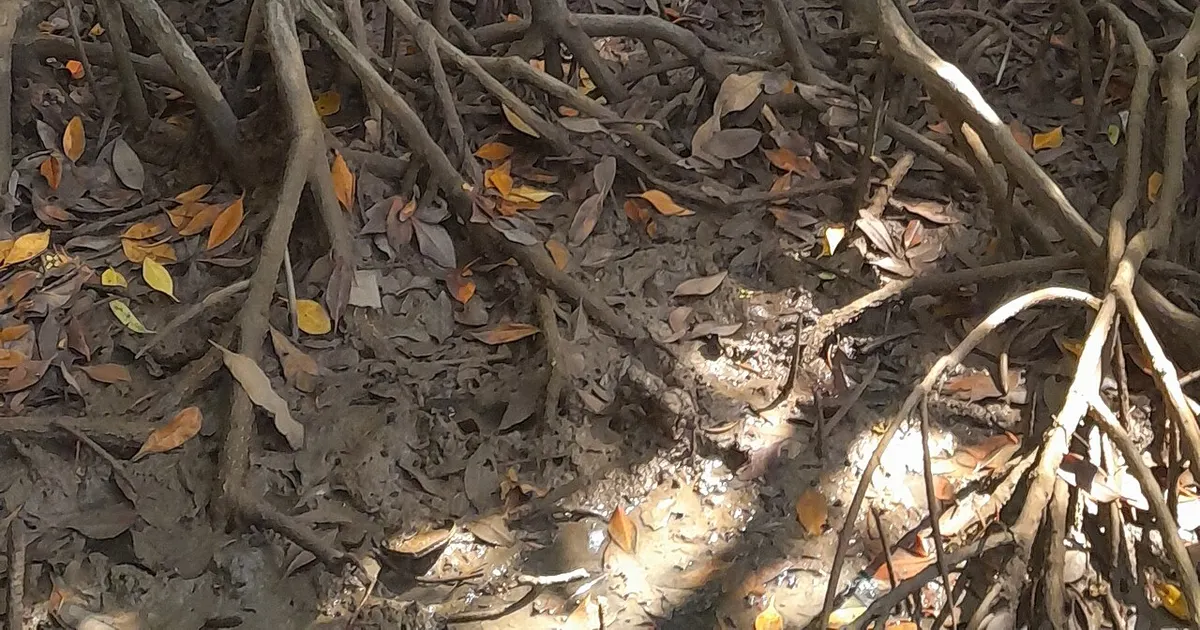
Ca Mau, at the southern tip of Vietnam, is home to a farming system that looks nothing like a high-density shrimp pond. Shrimp live in ponds cut into mangrove forest, with the trees standing around and inside the farm. A share of this production is certified organic, and it supplies a small premium niche in the EU and Japan.
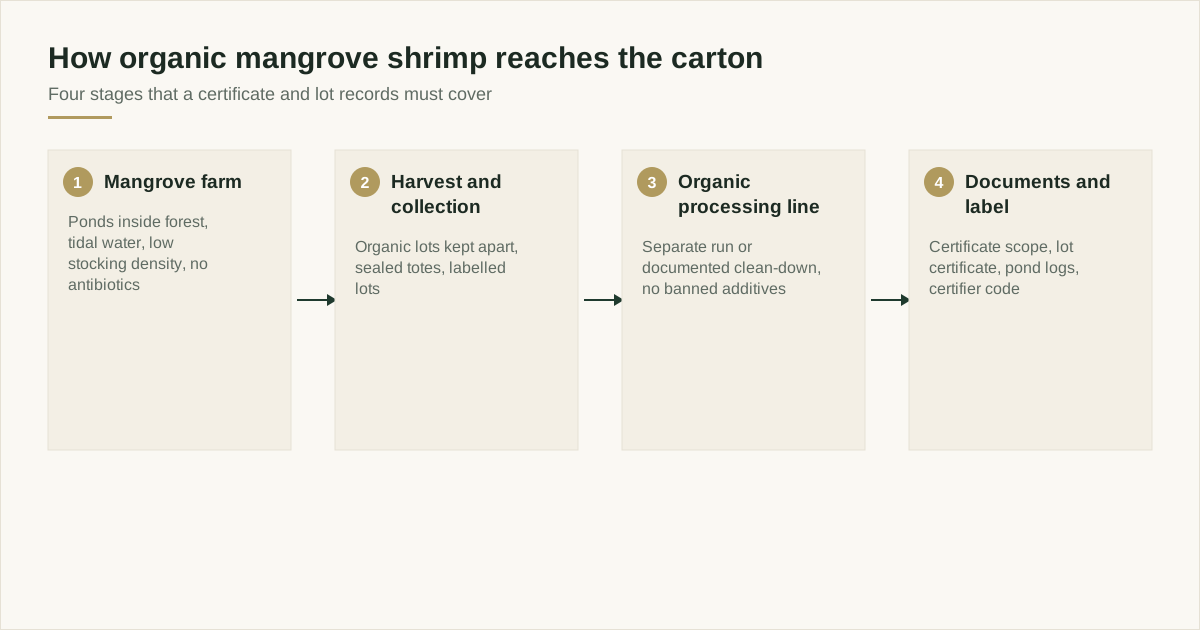
This guide explains how the system works, what organic certification checks and what a buyer should verify before putting the claim on a label.
The mangrove-shrimp system
Ca Mau holds a large area of mangrove forest along the coast, and farmers raise shrimp inside the forest rather than clearing it. A typical farm has a network of canals and shallow ponds with mangrove trees on the dikes and in the water. Tidal water enters through sluice gates and brings natural food and wild post-larvae, and farmers may add hatchery post-larvae to supplement.
Shrimp feed mostly on natural food in the water and on leaf litter and plankton that the mangrove ecosystem produces. Farms in the organic programmes avoid synthetic feed or use only approved organic feed in small amounts. Stocking densities are low compared with intensive ponds, so each pond produces far fewer kilograms per hectare, but the system uses few inputs.
The main species is black tiger shrimp, which tolerates the changing salinity of a tidal system, with some farms also harvesting mud crab and fish from the same canals. Local rules require farms in forest land to keep a minimum share of the area under mangrove cover, so the forest is part of the farm and not just a neighbour.
What organic certification checks
Several schemes certify organic aquaculture, including private standards and the EU organic rules for aquaculture. Their details differ, but they ask for similar things.
| Area | What auditors typically check |
|---|---|
| Site and forest cover | Share of area under mangrove, no clearing for ponds, legal land use |
| Stocking | Density limits, source of post-larvae, no hormones |
| Feed | Natural food and approved organic feed, no banned ingredients |
| Inputs | No antibiotics, no synthetic chemicals, restricted treatments |
| Water | Natural tidal exchange, no discharge problems |
| Harvest and handling | Separate handling of organic lots, clean ice and totes |
| Records | Pond logs, purchase records, traceability to the lot |
| Social | Basic worker rights and local community aspects in some schemes |
Check the exact standard of the scheme your customer accepts, because schemes differ on feed rules, density and forest cover.
Audits cover the farm, the collection route and the processing plant. A group of small farms usually certifies together under an internal control system in which the plant or a farmer group inspects every member and the certifier audits a sample. The certificate lists the group, the plant and the products in scope.
Why supply is limited
Three factors keep the volume small. The low stocking density gives low yield per hectare. Forest cover limits the area available for ponds. Certification caps the number of farms that qualify, because every farm must pass the rules and keep its records.
Production also follows nature. Tidal cycles drive harvest, with farmers catching shrimp in the days around the spring tides, and weather or salinity swings can reduce a crop. The shrimp are harvested at different sizes through the season, so a plant cannot always guarantee a fixed grade mix for each month.
For a buyer, the consequence is simple: plan well ahead and accept a broader size range than for conventional shrimp. A plant that has built a stable group of certified farms can commit to a volume per season, but it cannot add volume at short notice.
How the shrimp are sized and processed
Mangrove black tiger shrimp reach medium to large sizes, and plants usually offer headless shell-on and peeled forms, with some head-on for premium markets. Counts depend on the crop, and the grade mix is wide. The yield from head-on to tail meat follows the species, with a large head and thick shell, so the figures differ from vannamei. Our guide on vannamei versus black tiger shows how the species compare.
Organic processing needs separation. The plant must handle the organic lots in a clean line or after a documented clean-down, keep them apart in cold storage and mark the cartons with the lot and the certificate reference. Treatment rules also apply. Many organic standards limit or ban phosphate and other additives, so soaking policies must follow the scheme. The guide on soaking, STPP and non-phosphate agents explains the usual choices.
Claims on the label
Organic is a legal claim in most markets. It must come from a certificate that covers the product, and the label has to carry the certifier’s code and the origin where the rules require them. A plant cannot sell conventional shrimp as organic, and a buyer cannot claim organic on a product that lacks a valid certificate for that lot.
Other words need the same care. Terms such as mangrove-friendly, forest shrimp, natural and sustainable do not have a single legal meaning, and some markets treat them as misleading unless backed by evidence. Ask the plant which claims its certificates support and write the allowed wording into the contract. Our guide on shrimp certifications by export market explains how schemes and market rules fit together.
What a buyer can say about mangrove cover and carbon
Some customers ask for a story about the forest, such as hectares of mangrove protected or carbon stored. These claims need numbers that a certifier or a recognised study has checked. A plant can usually state the minimum forest cover required by the scheme and the area of the certified group, but it cannot give a carbon figure for your carton unless a study says so.
A safe approach is to repeat only what the documents state. For example, a buyer can say that the shrimp come from farms certified under a named organic standard, in which mangrove cover is part of the farm rules. Avoid figures that the plant cannot document, because a retailer or a regulator may ask for the source.
Ready to price this spec? Get matched with a shrimp supplier
Risks specific to the system
Three risks deserve attention. The first is weather. Storms, drought and salinity swings affect a tidal farm directly, and a bad season can cut the harvest sharply. The second is disease, since the shrimp live in open water exchange with the surrounding area and cannot be isolated as easily as shrimp in a closed pond. The third is mixing at the collection stage, when organic shrimp from a certified farm travel with other shrimp to the plant.
Plants manage the third risk with dedicated collection routes, sealed totes and labelled lots. Ask the plant to describe its chain from farm to plant, who transports the shrimp and how the plant checks the seals on arrival. A buyer who has a trace test done on an organic lot gains confidence at low cost.
Documents to ask for
- The organic certificate of the plant and of the farm group, with the scope and expiry date.
- The list of certified farms or the group’s internal control records.
- The transaction certificate or equivalent document for each lot, where the market requires it.
- Pond logs and harvest records for the lot.
- Residue and laboratory test results, since organic does not remove the need to test.
- A traceability test from carton to farm, as described in the guide on shrimp traceability in the Mekong Delta.
Verify each certificate with the certifying body before the first order. Certificates belong to the plant and the certifier, and ShrimpVN does not hold or issue them.
Testing and residues still apply
Organic status does not replace testing. Auditors check inputs and practices, but a border laboratory tests the shrimp in your carton, and a contaminated pond input or a mix-up at collection can still cause a failure. Ask the plant to run its normal residue programme on organic lots and to share the results. Our guide on antibiotic residue testing for EU and US entry lists the records to request.
Also ask how the plant handles a test failure on an organic lot. A strong answer names the steps: hold the lot, trace the farm, test retained samples, inform the certifier and stop supply from the farm until the cause is clear. A weak answer talks only about replacing the shrimp. The certifier expects to hear about a failure, and the buyer should hear about it too.
Price and what to expect
Organic mangrove shrimp sells at a clear premium over conventional shrimp of the same count. The premium covers lower yield, audit and certification costs, separate handling and a smaller supply base. It also reflects what the buyer’s customers are willing to pay for the story. Some buyers find the premium worth it for a retail range, and others use organic mangrove shrimp as a small, high-margin line next to a conventional programme.
Ask for a price at a defined count and form, with the certificate and the lot documents included in the price. Check the net weight after deglazing and the glaze limits, as for any frozen shrimp.
What to write in the request
- Claim required: organic with the standard named, or another specified claim.
- Species and form: black tiger, headless shell-on, peeled or head-on.
- Size range and the tolerance, accepting a wider spread than conventional.
- Volume per season and the months you need.
- Documents: certificate, lot certificate, pond logs and residue results.
- Additive rules: the treatment allowed by the standard.
- Label wording: the exact claim and certifier code the customer wants.
Next step
Name the standard your customer accepts and the volume you can commit, then write the seven lines above into one request. Send your spec through the request form and we match you with up to 3 Vietnam processors that work with certified mangrove farms. They reply within 24 business hours, and you can ask each one for its certificate scope before you go further.
See also: the black tiger shrimp reference: farming systems, counts and colour.
Frequently asked questions
What makes mangrove shrimp organic?
Organic status comes from a certification standard, not from the pond type alone. Auditors check stocking density, feed, inputs, mangrove cover, water management and traceability against the rules of the scheme. A farm in a mangrove can still be non-organic if it does not meet those rules and pass audit.
Why is organic mangrove shrimp more expensive?
Farms stock at low density, harvest smaller volumes per hectare, buy fewer inputs and pay for audits and certification. Supply is limited, and the plant must keep the lots separate from conventional shrimp. These costs show up in the price per kilogram.
Can any Vietnam plant sell organic shrimp?
Only plants whose supply chain and processing are covered by the certificate can sell the product as organic. The certificate lists the farms, the plant and the products in scope. Ask for the certificate, check its scope and expiry with the issuer, and match the lot code on the carton to the certified lot.
Ready to price this spec?
Send your species, size grade and certificate list. We match you with up to 3 Vietnam processors and reply within 24 business hours.
Get matched with a shrimp supplier