Guides / Specification
Shrimp pre-shipment inspection: how to run the thaw test, count and glaze check before a container loads
October 31, 2026
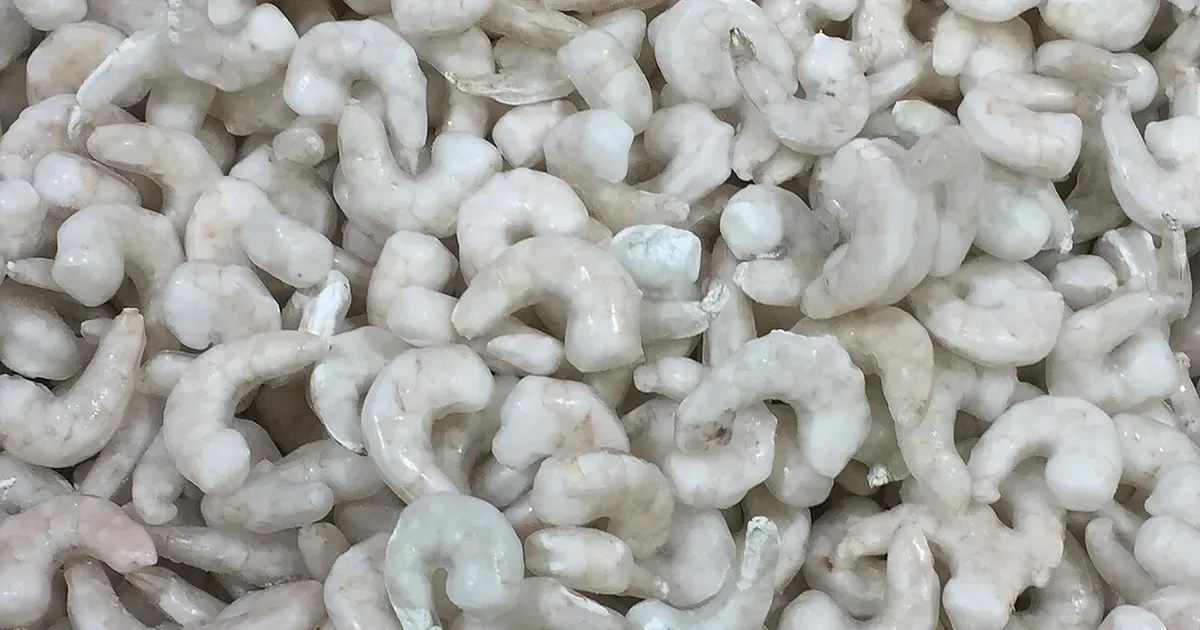
A shrimp pre-shipment inspection is a check of a sample drawn from the finished lot before the container loads. It covers seven things: carton marks, product temperature, deglazed net weight, count, defects, odor and the loading itself. Done with a written method, it turns “the shrimp looked fine” into numbers that both sides can accept or dispute. This guide follows Codex STAN 92, the international standard for quick frozen shrimps and prawns, and shows what to ask for in the order so the inspection can decide the payment.
When and who
Inspect after the lot is packed and before it leaves the cold store. At that point the cartons carry their lot codes, the product is frozen and a failed result can still change the outcome, because the plant can regrade, replace cartons or agree a credit. An inspection after loading only documents a problem.
The inspector can be an independent inspection company or your own representative. The skill that matters is the method, so give them a written one. Four items belong in the order:
- The standard. Name Codex STAN 92-1981 or your own specification, so that both sides measure the same thing.
- The sampling plan. Codex uses a plan with an acceptable quality level of 6.5. The sample unit is the primary container, or at least a 1 kg portion of the unit for individually quick frozen product. The number of units depends on the lot size and the plan, so name the plan. Net weight sampling follows a plan that meets the criteria of the Codex Alimentarius Commission.
- The inspector and the date window. A visit needs a fixed date and access to the lot before loading.
- The rule for a failed lot. Write what happens at each failure level before the visit, not after.
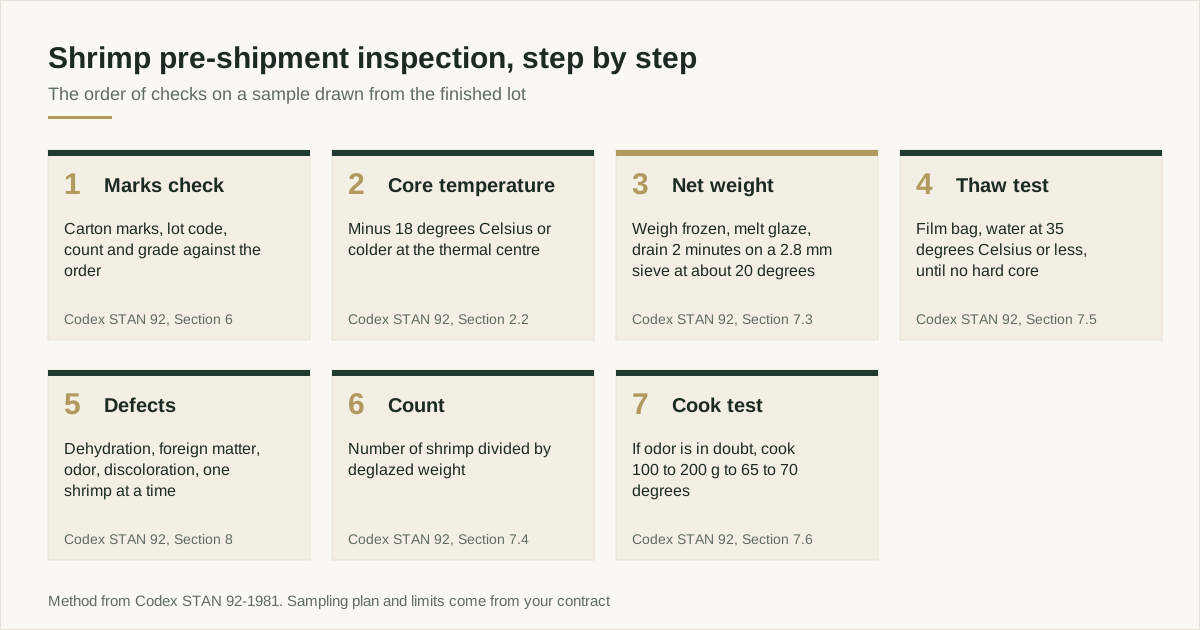
The seven checks, in order
| Step | What the inspector does | Reference in Codex STAN 92 |
|---|---|---|
| 1. Paperwork and marks | Matches carton marks, lot code, count and size grade with the order and packing list | Labelling, section 6 |
| 2. Temperature | Checks that product at the thermal centre is minus 18 degrees Celsius or colder | Section 2.2 |
| 3. Frozen examination and net weight | Weighs frozen, deglazes, drains and weighs again; looks for dehydration on the frozen shrimp | Sections 7.3 and 8.1 |
| 4. Thaw | Thaws a sample in a film bag in water at room temperature, at most 35 degrees Celsius | Section 7.5 |
| 5. Defects | Examines each thawed shrimp for foreign matter and presentation defects | Sections 8.2 to 8.4 |
| 6. Count | Counts the shrimp in the container or a representative sample and divides by the deglazed weight | Section 7.4 |
| 7. Odor and cook test | Cooks a small portion if odor or flavor is in doubt | Sections 7.6 and Annex A |
Net weight and glaze
This is the check with the most money in it, because glaze is water you pay for at the shrimp price. Codex section 7.3.2 describes the method for glazed product:
- Open the package immediately after it leaves low temperature storage.
- For raw shrimp, place the contents in a container fed from the bottom with fresh water at room temperature, at about 25 litres a minute.
- Weigh a dry sieve with a square aperture of 2.8 mm (or 2.38 mm, the US No. 8 screen). Use a 20 cm sieve for packs up to 500 g and a 30 cm sieve above that.
- When all the glaze that can be seen or felt is gone and the shrimp separate easily, empty the contents onto the sieve. Incline it at about 20 degrees and drain for two minutes.
- Weigh the sieve with the shrimp and subtract the sieve. The result is the net content.
Cooked product follows a similar path with water at 27 degrees Celsius, equal to eight times the declared weight. Glaze percent is the gap between the frozen weight and this net weight. Say in the contract which base the percentage uses, because glaze on gross weight and glaze on net weight give different numbers. Our guide to glaze, net weight and yield in shrimp quotes shows how a glaze change moves the price per kilo of shrimp.
The thaw test
The thaw test is the same for every sample so that results compare. Codex section 7.5 puts the sample unit in a film bag, immerses it in water at room temperature of no more than 35 degrees Celsius and squeezes the bag gently now and then until no hard core or ice crystals are left. The gentle squeeze matters, because rough handling breaks soft shrimp and creates the defect you are trying to measure. Note the thaw time, since an unusually long time can point to a large block or heavy glaze.
The count
Codex section 7.4 says that when a count is declared, the inspector counts the shrimp and divides by the actual deglazed weight, to give a count per unit of weight. A claim of 31 to 40 per pound can only be tested on deglazed weight. The same shrimp counted frozen with glaze would show a lower count and look larger than they are. Our guide to Vietnam shrimp size grades and how they set your price explains the grade bands that the count is tested against.
Defects the standard defines
Codex defines four defects that an inspector scores, and the sample unit counts as defective when it shows any of them.
| Defect | Codex definition |
|---|---|
| Deep dehydration | More than 10 percent of the shrimp weight in the unit, or more than 10 percent of the block surface, shows white or yellow dry areas that go below the surface and do not scrape off easily |
| Foreign matter | Any matter not derived from shrimp that is readily recognised without magnification or that signals poor hygiene practice |
| Odor or flavor | Persistent, distinct objectionable odor or flavor of decomposition, rancidity or feed |
| Discoloration | Distinct blackening or green or yellow color on more than 10 percent of the surface of a shrimp, affecting more than 25 percent of the sample unit |
Soft shell and breakage are not on this list, and black spot counts only when it reaches the discoloration limit. If they matter to you, define them in your own spec, as shown in our guide to frozen shrimp quality defects.
Ready to price this spec? Get matched with a shrimp supplier
What counts as a pass
Under Codex section 9 a lot meets the standard when four conditions hold:
- The number of defective units does not exceed the acceptance number of the sampling plan.
- The number of units that miss the declared count does not exceed the acceptance number.
- The average net weight of all units is not less than the declared weight, with no unreasonable shortage in any single container.
- The additive, hygiene and labelling requirements are met.
A plan at an acceptable quality level of 6.5 is a floor, not a promise. A buyer can write tighter limits for the defects that matter to the customer and set the acceptance number in the contract. Chemical tests, such as sulfite and phosphate content, need a laboratory. A common arrangement is that the inspector draws sealed samples for the lab, and the report says the lab results are pending.
The loading check
Inspection should not end at the cold store door. Codex Code of Practice CXC 52-2003 advises checking product temperature before loading, loading so that air can flow around the product, and monitoring air temperature with a recording thermometer during transport. Ask the inspector to attend loading when the budget allows: carton count against the packing list, container condition, product temperature at the door, the seal number photographed and the data logger placed inside a carton. Our guide on reefer loading for frozen shrimp covers the temperature chain from plant to port.
The report and the payment decision
A report that settles a dispute has the same parts every time: lot and carton codes, sample plan and sample size, each measurement with its method, defect counts, photos with a ruler and the carton code in frame, the temperature reading, the verdict against the contract and the list of lab samples sent. Agree the report template before the first order.
Link the report to money. If the balance is due on the bill of lading, the report is the document the buyer reads before releasing it. Our guide to payment terms and the first order timeline shows where inspection fits in the schedule.
Public price benchmarks for inspection do not exist, so we give no number. Inspection firms quote by visit, so compare quotes on the same scope: sample plan, lab tests, loading attendance and report time.
What to write in the request
- Standard: Codex STAN 92-1981 or your own specification.
- Sampling plan and sample unit, in writing.
- Glaze limit and the base for the percentage, plus the deglazing method.
- Count tolerance, tested on deglazed weight.
- Defect limits and definitions for the points that matter to your customer.
- Lab tests to run on retained samples and the limits.
- Inspection timing, inspector, loading attendance and report format.
- Remedy at each failure level: regrade, credit or rejection.
Next step
Write the eight lines above into your next request, with the remedy table, so the plant quotes against a method it can follow. Send your spec through the request form and we match you with up to 3 Vietnam processors. They reply within 24 business hours, and you can see which ones accept a written inspection method and which ones push back.
See also: shrimp glaze levels, net weight and the Codex deglazing method.
See also: how to read a shrimp certificate of analysis.
Sources
- Codex Alimentarius, CODEX STAN 92-1981, Standard for quick frozen shrimps or prawns
- FAO and WHO, Code of Practice for Fish and Fishery Products, CXC 52-2003, 2020 edition (PDF copy), section 21 Transportation
Frequently asked questions
What does a shrimp pre-shipment inspection check?
It checks a sample from the finished lot before loading: carton marks and lot codes, product temperature, deglazed net weight, count, defects such as dehydration, foreign matter and discoloration, and odor after thawing or cooking. The inspector records the results with photos and issues a report you can attach to the payment decision.
How do you test glaze and net weight on frozen shrimp?
Codex STAN 92 says to open the pack straight from cold storage and thaw it under running fresh water until all visible and felt glaze is gone. Drain on a 2.8 mm sieve inclined at about 20 degrees for two minutes. The drained weight is the net content. Glaze is the difference from the frozen weight.
What sample size does Codex use for frozen shrimp?
Codex STAN 92 uses a sampling plan with an acceptable quality level of 6.5. The sample unit is the primary container, or at least a 1 kg portion for individually quick frozen product. The exact number of units comes from the sampling plan you name in the contract, so write the plan into the order.
Who should pay for a pre-shipment inspection?
Buyer and processor agree this before the order. A buyer who wants an independent view normally orders and pays for the inspector. Whichever way you split the cost, name the inspector, the standard, the sampling plan and the rule for a failed lot in the contract.
Ready to price this spec?
Send your species, size grade and certificate list. We match you with up to 3 Vietnam processors and reply within 24 business hours.
Get matched with a shrimp supplier