Guides / Specification
Black spot on shrimp: why melanosis happens and how Vietnam plants prevent it
October 24, 2026
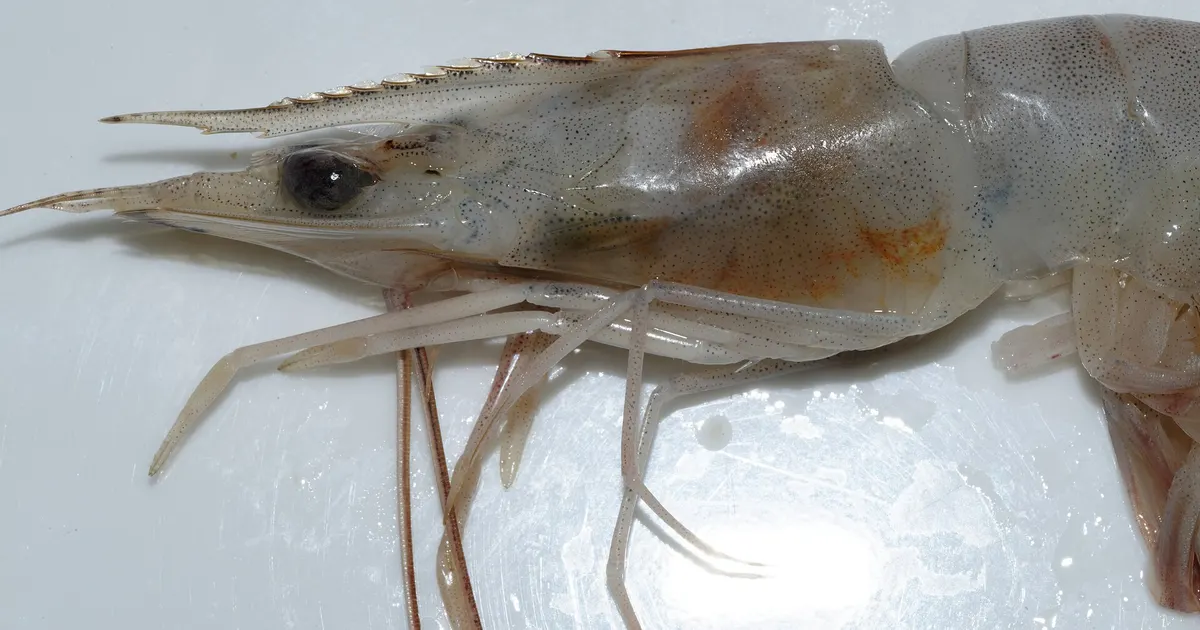
Few defects annoy a shrimp buyer more than black spot. A carton opens, the shrimp look right on size and count, and then the heads and shell joints show dark patches that were not there on the sample. The defect is called melanosis, and it begins in the hours after harvest, long before the shrimp reach a freezer.
This guide explains what melanosis is, how plants prevent it and how to write a black spot limit that both sides can check.
What melanosis is
Melanosis is the dark discoloration that appears on crustacean shells and sometimes on the meat. It comes from an enzyme called polyphenol oxidase that sits in the shrimp’s tissue in an inactive form. When the shrimp die, or when the tissue is crushed or exposed to air, the enzyme becomes active and converts natural phenolic compounds into dark pigments in a chain of reactions. The same chemistry turns a cut apple brown.
The first dark patches usually show at the head, where digestive tissue holds a lot of the enzyme and its substrates, and at the joints between shell segments and along the edges of the shell. In an advanced case the dark color spreads into the tail meat under the shell.
Melanosis is not a disease and it is not bacterial spoilage. It is a post-harvest quality defect driven by time, temperature and handling.
Black spot from the pond versus black spot after harvest
Two different problems share the name, and a buyer should know which one a plant is talking about.
| Type | When it forms | Cause | Typical look |
|---|---|---|---|
| Post-harvest melanosis | Hours to days after harvest | Enzyme action after death, fast in warm and damaged shrimp | Dark head, joints and shell edges |
| Shell lesions from the pond | While the shrimp are alive | Shell damage and infection that the shrimp seal with dark pigment | Fixed dark spots on the shell body, present at harvest |
The first type is controllable at the plant and during transport. The second type is a farm-level issue and shows that the shrimp had shell damage during grow-out. Plants cannot reverse it, and the only control is to reject the affected shrimp at intake.
What speeds melanosis up
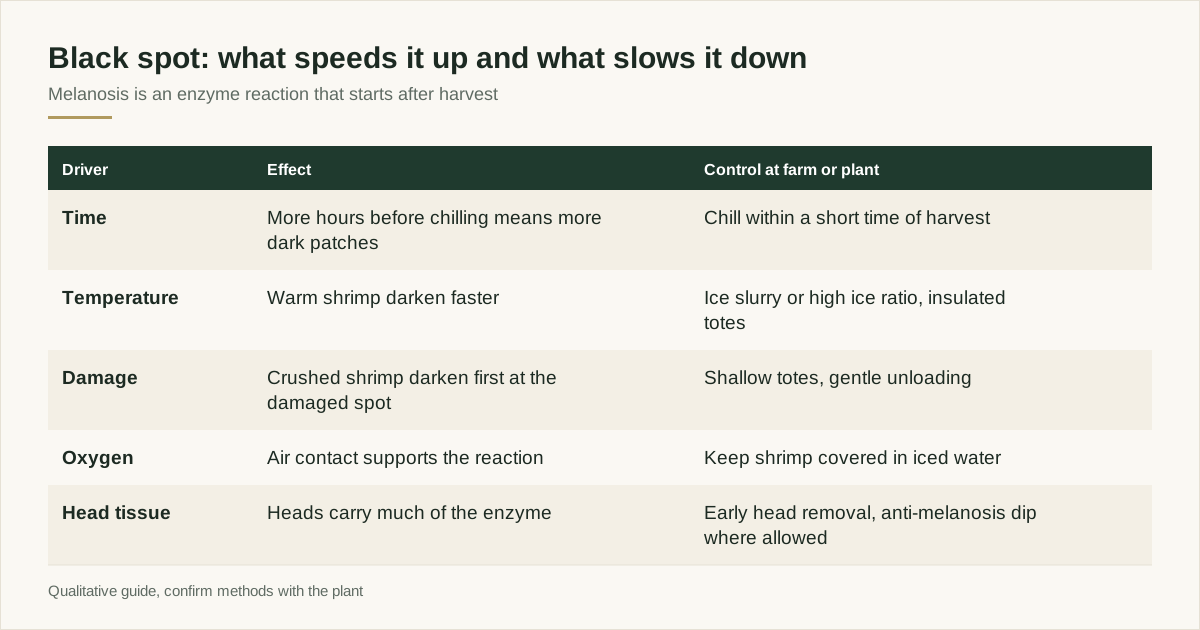
Five factors raise the speed of the reaction.
- Time. Every extra hour between harvest and chilling or freezing gives the enzyme more time to work.
- Temperature. Warm shrimp darken faster. A pile of shrimp in a hot truck or an unshaded landing can darken within hours.
- Damage. Crushed or torn shrimp release the enzyme and its substrates and darken at the damaged spot first.
- Oxygen. Exposure to air supports the reaction. Shrimp left uncovered darken faster than shrimp in iced water.
- Species and stage. Some species and moulting stages are more prone than others, and shrimp harvested soon after moulting have softer shells that damage more easily.
The practical lesson is that the plant cannot fix melanosis at the line alone. It depends on harvest timing, ice use, transport and intake sorting.
How plants prevent it
Plants and farmers combine several controls.
Rapid chilling at harvest. Shrimp go straight from the pond into iced water or onto a layer of ice at a high ratio of ice to shrimp. The aim is a core temperature near zero degrees Celsius within a short time. Many Vietnam farms use ice slurry at harvest for this reason.
Short transport and clean ice. The route from farm to plant should be as short as possible, with enough ice to last the journey and drain holes so shrimp do not sit in warm water. Insulated totes slow the rise in temperature.
Gentle handling. Shrimp should not be crushed under their own weight or dropped. Shallow totes and careful unloading reduce damage.
Head removal. Heads carry much of the enzyme and the digestive tissue, so removing them early lowers the risk in the tail. Headless product usually shows less black spot than head-on product, but the head-on form is more sensitive to delay.
Anti-melanosis agents. Plants dip or spray shrimp in a solution that blocks the enzyme. Sulfite-based agents such as sodium metabisulfite are effective and low in cost, but they must be declared and are restricted in many markets. Sulfite-free options include 4-hexylresorcinol and blends based on citric acid and other ingredients. These work well but need correct concentration and contact time.
Fast freezing and glazing. Once the shrimp are frozen, melanosis stops. A good glaze limits oxygen contact during frozen storage and reduces dehydration.
Sulfites, labels and market rules
Sulfites raise a labeling question. Many markets treat sulfites as an allergen and require a declaration when the level in the product is above a small threshold. The EU also sets maximum sulfite levels for crustaceans, with different limits by size band, and the US requires declaration above a stated threshold. Japan, Korea and Australia each have their own rules.
If your customer sells under a clean-label or sulfite-free policy, say so in the first message and ask the plant to describe its anti-melanosis method and its testing. Some plants test finished lots for sulfite and can supply the result. Our guide on soaking, STPP and non-phosphate agents explains the parallel questions for water-retention treatments.
Black spot by processing form
Head-on shrimp show melanosis first and most clearly, since the head carries the enzyme and the digestive tissue. A head-on carton that looks clean at packing can show dark heads after a few weeks of frozen storage if the shrimp were handled slowly before freezing. Buyers of head-on shrimp should ask about the time from harvest to freezing and about the ice ratio at the landing.
Headless shell-on shrimp carry less risk, because the main source of the enzyme is gone, but dark lines along the shell edge and the underside still appear when delay or damage occurred. Peeled and deveined shrimp rarely show black shell patches, but the meat can show dark streaks along the vein line or at the cut edge after a long delay. Cooked shrimp stop the reaction because heat inactivates the enzyme, which is why cooked product shows black spot only when it formed before cooking.
Match the tolerance to the form. A spec that allows slight spot on head-on shrimp, where the head is not eaten, might ask for none on the tail of a peeled shrimp.
Ready to price this spec? Get matched with a shrimp supplier
How storage time affects what you see
Black spot that is invisible at packing can appear later if the freezing was slow. Freezing stops the enzyme, but a shrimp that had already begun to darken will show the dark patch once it thaws, and the patch looks worse after glaze loss. Long storage with temperature swings also lets the enzyme restart in partly thawed areas.
Buyers can reduce the risk by setting a maximum age at arrival and by asking the plant for temperature records of the frozen store. A carton produced within a few months and held at a stable minus 18 degrees Celsius or colder keeps its color far better than one that sat in a warehouse that cycled through warm spells. Our guide on glaze, net weight and yield explains how glaze protects shrimp during storage and how to check it.
How to write a black spot limit
Buyers lose arguments about black spot when the spec says only “no black spot”. No plant can promise zero across a whole container, and a vague rule leaves room for dispute. A usable limit has four parts.
- Definition. Describe what counts as black spot, for example any dark patch visible on the tail or on the shell edge after thawing, excluding the head on head-on product.
- Severity levels. Separate slight, moderate and heavy black spot, with a photo chart attached to the spec.
- Tolerance. State the maximum share of pieces by count or weight at each level, for example a small percentage with slight spot and none with heavy spot.
- Method. Specify the sample size, the thaw method and the inspection light, and say who inspects and when.
Write the photo chart into the contract as an appendix. Photos remove most of the argument at claim time.
How to inspect a lot
A simple arrival check takes less than an hour per lot.
- Pull sample cartons from several pallet positions.
- Thaw the sample under controlled conditions, drain and spread the shrimp on a white tray.
- Count pieces by severity against the photo chart.
- Record the result with the carton code and take photos with a scale.
- Compare against the tolerance and send the file to the plant on the same day.
Prompt claims matter. A plant can check its own retained sample and trace the lot to a farm or collector only if the claim arrives while the records are fresh. The guide on frozen shrimp quality defects covers the inspection method for other defects in the same session.
Questions to ask a plant
- How long between harvest and chilling, and how do you measure it?
- What ice ratio and what temperature do you require at intake?
- Do you use an anti-melanosis agent, and which one, at what concentration?
- Do you test for sulfite, and can you send the lot result?
- How do you sort black spot at intake and what is your reject rate?
- Which photo chart or defect standard do you use for the final inspection?
What to write in the request
- Product form: head-on, headless or peeled, since melanosis behaves differently in each.
- Black spot definition, severity levels and tolerance, with a photo chart.
- Anti-melanosis method allowed, and the sulfite limit or a sulfite-free requirement.
- Inspection method on arrival and the claim period.
- Documents: product specification sheet, additive statement and lot test results.
Next step
Write your black spot limit and your treatment rule into one request, and attach your photo chart if you have one. Send your spec through the request form and we match you with up to 3 Vietnam processors that can work to it. They reply within 24 business hours, and you can compare how each one controls the time between harvest and freezing.
See also: the Codex CXS 92-1981 standard for quick frozen shrimp, explained.
Frequently asked questions
Is black spot on shrimp harmful to eat?
Melanosis is a color change caused by natural enzymes, not by spoilage bacteria, and it does not make the meat unsafe by itself. It does mark the shrimp as handled poorly or held too long, and buyers reject it because it looks bad and often signals other quality losses.
What causes black spot after harvest?
An enzyme in the shrimp, polyphenol oxidase, turns natural compounds into dark pigments once the shrimp die. Time, warm temperature, damage from rough handling and contact with air speed the reaction. Fast chilling and careful handling slow it down.
Do sulfites have to be declared on shrimp labels?
Sulfites are used by some plants to stop melanosis, and most major markets require a declaration above a small threshold because sulfites can trigger reactions in sensitive people. Check the threshold and wording for your market and ask the plant to state any sulfite use on the specification sheet.
Ready to price this spec?
Send your species, size grade and certificate list. We match you with up to 3 Vietnam processors and reply within 24 business hours.
Get matched with a shrimp supplier