Guides / Choosing a Supplier
Sea-caught or farmed shrimp from Vietnam: how supply, paperwork and quality differ
October 18, 2026
Most of the shrimp that leave Vietnam in a container were grown in a pond. A smaller share was caught at sea by trawlers and other gear, and it behaves like a different product line. The shell, the size spread, the supply calendar and the import documents all change, and a buyer who writes one spec for both runs into trouble.
This guide compares the two on the points that decide an order.
Two supply systems
Farmed shrimp come from ponds along the coast and in the delta, stocked with hatchery post-larvae and harvested on a schedule. The farmer controls the timing, the plant can plan raw material and the size grade follows the crop cycle. Farmed vannamei and black tiger make up the bulk of exports.
Sea-caught shrimp come from fishing vessels working in coastal and offshore waters. Boats land a mix of species and sizes, and the catch depends on the season, the weather and the fishing effort. Species landed in Vietnamese waters include banana prawns, pink and greasyback shrimp and several smaller marine species, along with wild black tiger in small volumes. Plants buy at fishing ports, sort by species and size and then process.
The two systems differ in what a plant can promise. A plant with farm supply can quote a volume, a grade and a delivery month with some confidence. A plant working with wild catch can promise a species and a quality standard but less on volume and timing.
What changes in the product
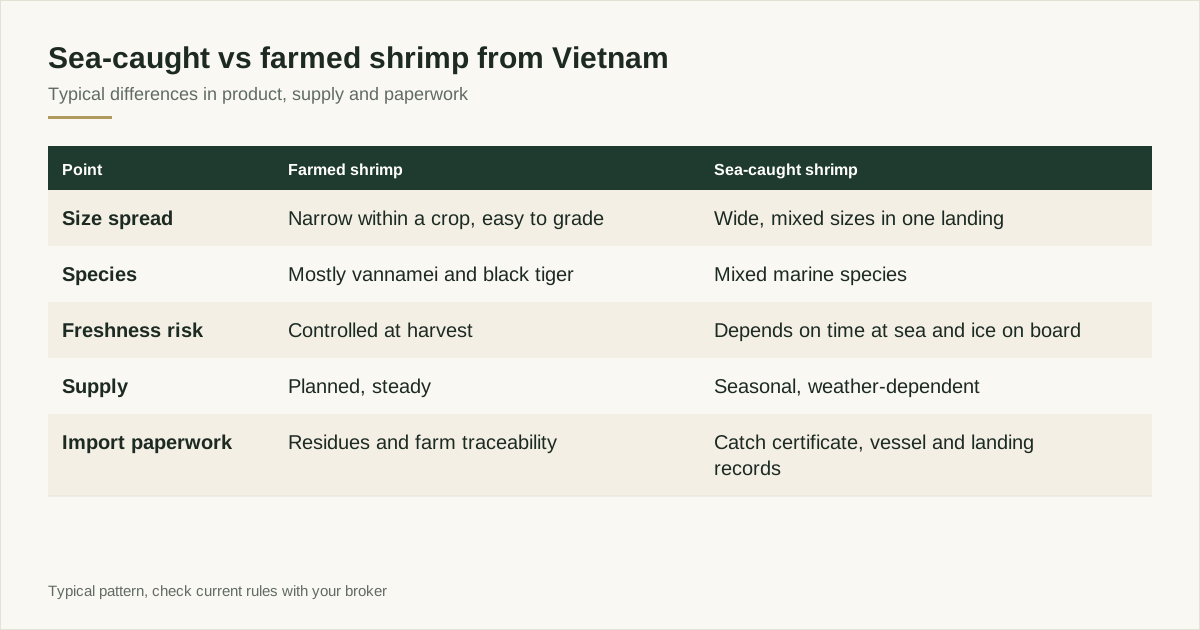
| Point | Farmed shrimp | Sea-caught shrimp |
|---|---|---|
| Size spread | Narrow within a crop, easy to grade | Wide, mixed sizes in one landing |
| Species | Mostly vannamei and black tiger | Mixed marine species, depends on the fishery |
| Shell and color | Even, predictable | Variable, can be thicker with patches |
| Flavor | Mild, consistent | Often stronger, more varied |
| Freshness risk | Controlled at harvest | Depends on time at sea and ice on board |
| Supply | Planned, steady | Seasonal, weather-dependent |
| Price | Stable relative to count | More volatile, can be higher for premium species |
The comparison is typical, not universal. A well-run wild fishery with ice on board and short trips delivers excellent shrimp, and a poorly managed pond delivers poor shrimp.
Freshness and handling at sea
Freshness is the main quality risk for wild shrimp. A trawl haul stays on deck and in the hold until the boat returns, and the time and temperature in that window decide how much melanosis and softening develop. Boats that ice the catch quickly, sort on deck and keep trips short deliver better raw material than boats that stay out for days with little ice.
Some wild shrimp receive a dip on board to slow black spot. The treatment, the concentration and the labeling follow the same rules as for farmed shrimp, so a buyer should ask which agent was used. Our guide on black spot in shrimp explains the causes and the usual controls.
Shrimp landed after a long trip also lose firmness, and the plant must sort harder and accept a higher rejection rate. The rejection rate shows up in price. A low quote on wild shrimp without a stated freshness standard is a warning sign.
Sizes and grading
Wild landings mix sizes. A single haul can include shrimp from small to large, with a bell-shaped spread around the average, so a plant must sort the catch into grades and sell the leftovers in other grades. The price of a grade reflects the supply of that grade in the haul, and a narrow request for one size can cost more than a request that accepts a range.
Buyers get better results by writing a flexible size spec for wild shrimp. Ask for a range, such as two adjacent grades, instead of a single grade, and agree on a method for counting and tolerance. The guide on size grades and pricing explains how grades are written.
Documents and market rules
This is where the two systems diverge most for a buyer. Wild-caught seafood faces rules that target illegal, unreported and unregulated fishing, and farmed shrimp faces rules centred on residues and farm traceability.
- EU. Wild-caught fishery products need a catch certificate that links the product to a vessel and a fishery. Vietnam has faced a warning status from the EU on its efforts against illegal fishing, so check the current position and the effect on checks at the border.
- United States. Imports of shrimp fall under the seafood import monitoring programme, which asks for data on the harvest. Wild fisheries face further requirements, including marine mammal protection comparability findings and sea turtle protections for shrimp trawling. Check the status of the fishery with your broker.
- Other markets. Japan, Korea and Australia apply their own entry rules, and some importers add sustainability or catch-origin conditions.
Because rules change, treat this section as a checklist of topics, not as legal advice. Ask the plant for the vessel list, the catch documents and the landing records, and confirm the requirements with your customs broker. Our guide on shrimp certifications by export market lists the paperwork for farmed shrimp and shows where wild catch adds to it.
Seasons, closures and supply planning
Wild shrimp supply follows the fishing calendar. Vietnam applies seasonal fishing closures in parts of its waters to protect spawning stock, and typhoon and monsoon weather keep boats in port for days at a time. Landings therefore swing, and prices follow. A buyer who needs wild shrimp each month should agree on a flexible delivery schedule and accept that some months carry less volume.
Farmed shrimp supply runs on pond cycles, and the calendar is more predictable. Many farms stagger stocking so a plant has raw material for most of the year, with some months seeing peaks and others tighter supply. Ask each plant for its typical monthly pattern for the grade you want, and plan stock accordingly.
Ready to price this spec? Get matched with a shrimp supplier
Handling, cold chain and storage
Both product types need an unbroken cold chain after the plant. Frozen shrimp should be held at minus 18 degrees Celsius or colder from the freezer to the importer’s cold store, with a temperature log for the container. Wild shrimp with a thin shell and soft tissue can suffer more from temperature swings, and a heavy glaze may help, though it raises the net weight question described in our guide on glaze, net weight and yield.
Ask for production dates on every carton and set a maximum age at arrival. A wild product with long storage before shipment can show freezer burn and flavor loss that a fresh pack would not.
Sustainability claims
Wild fisheries can carry sustainability certification, and farmed shrimp can carry farm-level schemes. The claims differ and buyers should not mix them. A fishery certificate says something about stock health and fishing practice, and a farm certificate says something about pond management and social aspects.
Ask which scheme the plant refers to, who holds the certificate and how the plant keeps certified and non-certified product apart. Certificates belong to the plant, the vessel owner or the farm group and the certification body, and a buyer should verify them with the issuer. Do not repeat a claim on a label unless the certificate covers the lot.
Cost structure and how to read a price gap
The two systems carry different costs. A farm pays for post-larvae, feed, aeration, labor and the risk of crop loss, and it can spread those costs over a planned harvest. A fishing vessel pays for fuel, crew, ice and gear, and it carries the risk of an empty trip. A plant buying wild shrimp pays for sorting a mixed landing into grades and absorbs a higher reject share.
When a wild quote and a farmed quote sit far apart, ask what explains the gap. A low wild price may reflect poor freshness or a heavy share of small sizes. A high wild price may reflect a premium species, a short supply or a certified fishery. A farmed price below the market may reflect a heavy soak or high glaze. Ask each plant for the species, the grade mix, the glaze and the treatment before you judge the number.
Plan a trial order for the wild product, since its quality varies more from lot to lot than farmed product does. A trial of one container, with inspection and a cook test, tells you more than a spec sheet. Review the result with the plant and agree on the corrections before you commit to a season.
Which one suits which programme
| Programme | Better fit | Reason |
|---|---|---|
| Mainstream retail bags | Farmed | Even size, steady supply, predictable price |
| Breaded and value-add | Farmed | Consistent counts, volume |
| Premium retail with a wild story | Sea-caught | Species and origin narrative |
| Chef and specialty restaurants | Either | Depends on flavor target and species |
| Ingredient use in sauces and dumplings | Either, often smaller wild species | Flavor and cost |
Some buyers run both, with farmed shrimp as the base and a wild-caught line as a premium or seasonal item.
How to compare samples
Order sample cartons of both products at a comparable grade and run a side-by-side test.
- Thaw both under the same conditions and weigh deglazed product.
- Count pieces per kilogram and note the spread of sizes in each carton.
- Cook both the way your customer cooks and score flavor, bite and color.
- Check the shell, the head and the joints for black spot and damage.
- Record the results with the lot codes and photos.
Repeat the test with a second lot from each, to see how consistent each source is.
What to write in the request
- Source: farmed, sea-caught or both for comparison.
- Species and the Latin name for each.
- Size spec: a range for wild shrimp, with the tolerance and a counting method.
- Freshness standard: time at sea, ice ratio and the treatment allowed.
- Documents: catch certificate, vessel list and landing records for wild shrimp, farm records for farmed.
- Volume, season and flexibility on grade mix.
Next step
Decide whether your customer values consistency or origin and flavor, then write the six lines above into one request. Send your spec through the request form and we match you with up to 3 Vietnam processors that handle the source you name. They reply within 24 business hours, and you can ask each one for catch or farm records with the first quote.
See also: the black tiger shrimp reference: farming systems, counts and colour.
Frequently asked questions
Is sea-caught shrimp from Vietnam a big part of exports?
Farmed shrimp supplies the large majority of Vietnam's shrimp exports, and sea-caught shrimp is a smaller, more specialised share. Wild product reaches buyers who want a particular flavor, species or story and who accept a wider size spread and a less predictable supply.
Do I need extra documents for wild-caught shrimp?
Yes, usually. Wild-caught seafood entering the EU needs a catch certificate under the rules against illegal fishing, and US imports face their own checks on wild fisheries. Farmed shrimp follow a different set of residue and traceability rules. Confirm the current requirements with your broker before ordering.
Does sea-caught shrimp taste better than farmed?
Many chefs find wild shrimp has a stronger, more mineral flavor and a firmer bite, but farmed shrimp can be excellent and is far more consistent. Taste depends on species, freshness, handling and cooking. A blind cook test of both, side by side, settles the question for your own customers.
Ready to price this spec?
Send your species, size grade and certificate list. We match you with up to 3 Vietnam processors and reply within 24 business hours.
Get matched with a shrimp supplier