Guides / Specification
Nobashi shrimp: how a stretched shrimp is cut, straightened and packed for Japan
October 15, 2026
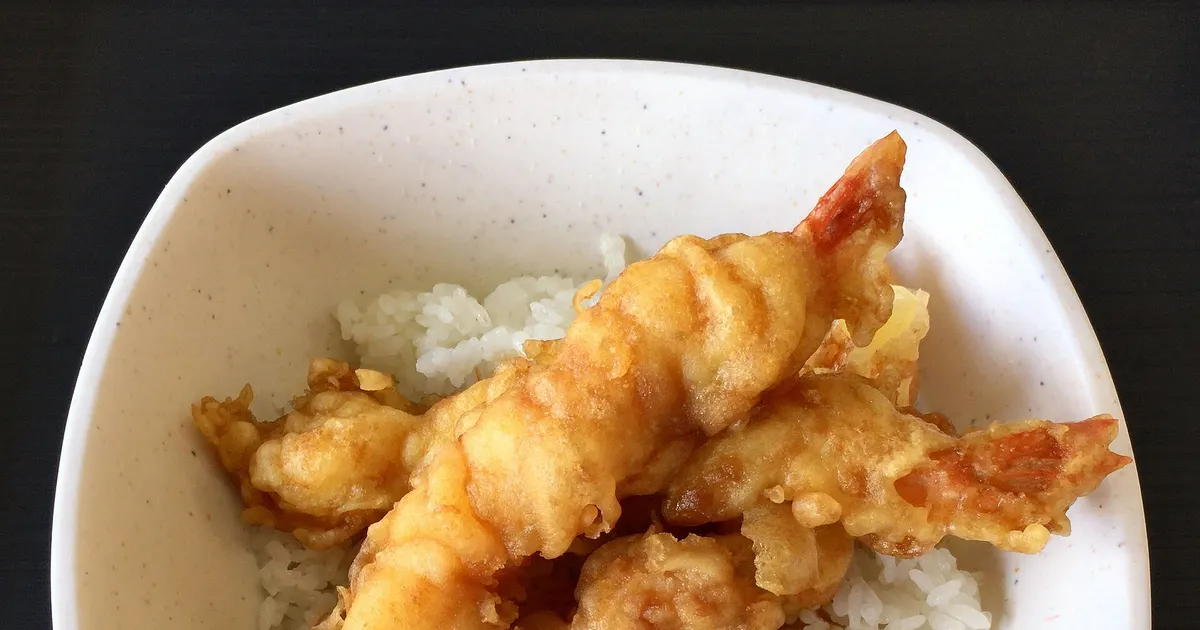
Open a Japanese tempura set and the shrimp lies perfectly straight, longer than a normal shrimp of the same weight, with an even stripe pattern on the back. That shape does not come from a special species. It comes from a processing step called nobashi, and it is one of the most exacting products a Vietnam plant makes for Japan.
This guide explains the process, the specs Japan buyers write and the points where a quote for nobashi goes wrong.
What nobashi means and why Japan buys it
Nobashi means stretched. A raw shrimp curls when it cooks because the abdominal muscle contracts. In tempura and ebi fry, a curled shrimp fries unevenly and looks small on the plate. A straight shrimp stays flat in the batter, fries evenly and looks larger than its weight suggests.
Japan uses nobashi in several places. Tempura restaurants and tempura toppings on udon and soba use it. Convenience store and supermarket sets with ebi fry use it. Sushi chains use stretched, cooked shrimp as topping because the straight body lies flat on the rice.
The product is a premium format inside the shrimp trade because the yield after stretching is lower and the labour per kilogram is higher than for a plain peeled shrimp. Japan buyers accept this and pay for it because the finished plate depends on shape.
How a plant makes nobashi
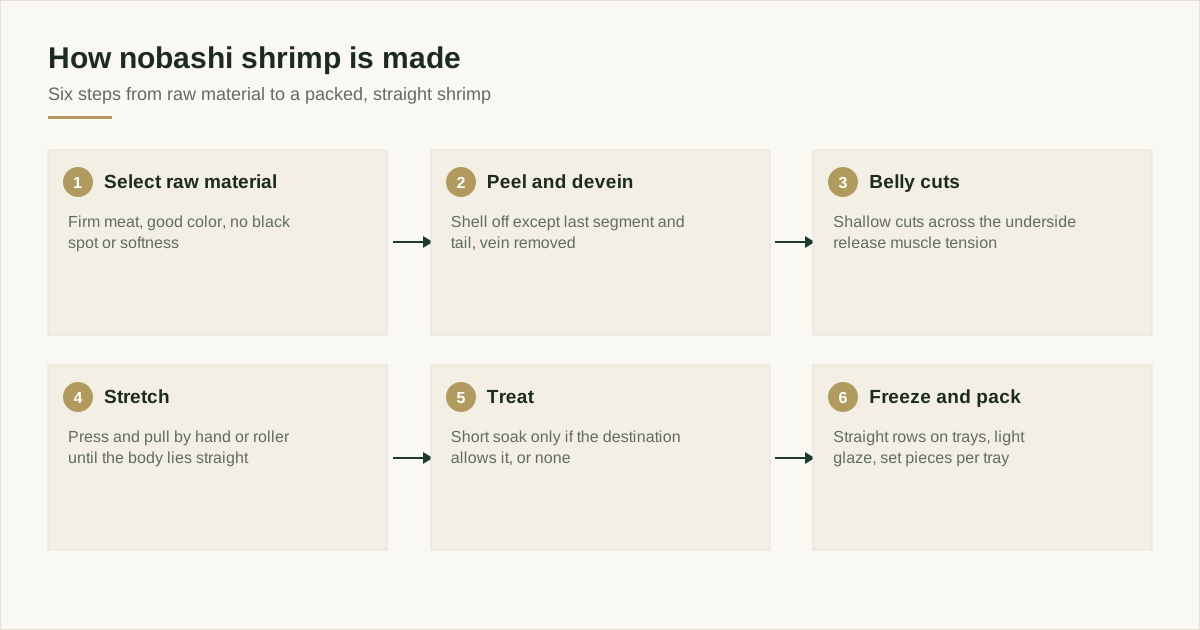
Nobashi follows peeled and deveined, tail-on processing, with extra steps. A common sequence looks like this.
- Raw material selection. The plant picks shrimp with firm meat, good color and no black spot or softness. Defects show up sharply after stretching.
- Peeling and deveining. The shell is removed except for the last segment and the tail, and the vein is taken out along the back.
- Belly cuts. A skilled worker makes shallow cuts across the underside of the abdomen. The cuts release the tension in the muscle so the body can straighten. Depth and spacing matter, because cuts that are too deep tear the meat and cuts that are too shallow leave the curl.
- Stretching. The worker presses and pulls the shrimp gently by hand or on a roller until the body lies straight. The finished piece is longer and flatter than the raw shrimp.
- Soaking or treatment. Some plants apply a short soak to hold moisture, within the additive rules of the destination. Many Japan buyers require a no-additive or limited-additive process.
- Freezing and packing. The shrimp are laid straight in rows on a tray, frozen as a layer pack or frozen individually, glazed lightly and packed.
The hand skill in steps three and four explains why plants that do nobashi well tend to be those with long experience of Japan orders. A line that makes it only occasionally struggles with shape consistency.
Specs Japan buyers write
Japan buyers write nobashi specs more tightly than most other markets. Expect the following fields.
| Spec line | What it usually looks like | Why it matters |
|---|---|---|
| Piece weight | A narrow band in grams per piece after stretching | Sets the plate size and cost per portion |
| Piece length | A range in centimetres with minimum length | Controls the look in tempura |
| Pieces per pack | A fixed count per tray or per kilogram | Easy checking at the buyer’s line |
| Tail | Tail-on with fan intact | Visual cue and handle for the diner |
| Color | Even body color, no black spot or red head residue | Buyer rejects visible defects |
| Treatment | No additive or limited additive, written | Japan clean-label expectations |
| Pack | Layer pack or tray pack with shrimp aligned in rows | Protects shape in transport |
Numbers for weight and length vary by customer and programme. Ask the plant for a sample tray and weigh and measure ten pieces yourself before agreeing a band.
Why sizing differs from plain peeled shrimp
Size grades for raw shrimp use the count per pound of the raw or peeled shrimp. Nobashi shifts the weight because the shrimp loses part of its mass in the belly cuts and gains length in stretching. A piece that was a certain raw grade becomes a different weight band after stretching.
That is why Japan buyers ask for weight per piece after stretching and the number of pieces per tray. A plant that quotes in raw size grade only leaves you to guess the finished weight. Agree on the finished weight band first, and let the plant work backwards to the raw size it needs.
The same logic applies to glaze. A tray of nobashi often carries a light glaze to protect shape, and the net weight after deglazing is what you pay for. Our guide on glaze, net weight and yield in shrimp quotes shows how to normalise offers.
Common problems with nobashi quotes
Four problems appear repeatedly.
Curling after thaw. If the shrimp were stretched too hard or frozen warm, they curl back when thawed and the shape benefit disappears. Ask the plant to run a thaw and fry test on a sample before the first order.
Torn meat. Belly cuts that go too deep tear the flesh and leave rough, pale patches. In tempura the tears absorb batter unevenly. Check the sample under good light.
Mixed size inside a tray. Even a small spread in piece weight looks sloppy in a row of ten shrimp. Ask for the tolerance in grams and for the plant’s inspection method.
Hidden additives. A heavy soak raises the weight and softens the bite. Japan buyers often reject it, and some importers test for phosphate. State the treatment in the spec and ask for the additive record.
What drives the cost of nobashi
Four factors set the price gap between nobashi and a plain peeled shrimp. Labour is the largest, because skilled hands make the belly cuts and straighten each piece. Raw material loss is the second, since the cuts and the trimming remove meat and cut the usable weight. Selection is the third: plants reject more shrimp at intake because defects show after stretching. Packing is the fourth, because aligned rows in a tray take longer than loose bagging.
A buyer who compares nobashi with a plain peeled and deveined offer should compare the price per piece or per portion of finished product, not only per kilogram. A tray of ten stretched shrimp in a narrow weight band can cost more per kilogram and still cost less per plate than a plain shrimp that needs a larger count to look right.
Ready to price this spec? Get matched with a shrimp supplier
Lead time and planning
Nobashi runs on dedicated labour, so plants plan it in blocks. A new programme often needs a trial run to set the cut depth and the weight band, and the first order may take longer than a repeat order. Ask the plant how many trained workers it has on the line, how many kilograms a shift produces and how it covers absences.
Raw material supply also matters. Shrimp with the right size and firm meat are not available every week, and the best months for large shrimp depend on the farming cycle. Share your annual volume and the months you need with the plant so it can schedule raw material. Our guide on payment terms and the first order timeline explains how a trial order and repeat orders usually run.
Residues, documents and the Japan import check
Japan applies a positive list system to agricultural chemical residues in food, including aquaculture products, and sets maximum levels for listed substances with a uniform limit for substances not on the list. Importers also care about additive declarations and about the labeling of allergens such as crustaceans. Check the current rules with your importer, and keep the plant’s lot records ready.
Documents Japan importers commonly ask for include the health certificate from the Vietnam authority, the product specification sheet, the lot traceability record and the laboratory test results for the lot. Our guide on shrimp certifications by export market lists the schemes each market expects. Certificates belong to the plant, and a buyer should verify them with the issuer.
How to sample before you commit
Order a sample tray from the plant’s regular production, not a hand-picked tray prepared for show. Run these steps at your own kitchen or your importer’s lab.
- Thaw the tray in a refrigerator and measure ten pieces for weight and length.
- Fry five pieces in tempura batter and compare the shape before and after.
- Check the color of the cut surfaces and the tail fan.
- Weigh the glaze loss on the frozen tray.
- Photograph the tray before and after for the file.
A plant that sends a clean sample and answers questions about the process quickly is usually a good match for a recurring Japan programme.
Storage and thaw advice for the kitchen
Nobashi keeps its shape best when it thaws slowly and cold. Instruct the kitchen to thaw trays in a refrigerator and to fry the shrimp soon after thawing, since a long wait lets the muscle relax and the shape drift. Warm thaw in water can leach flavor and soften the meat. Print the thaw and fry guidance on the carton, and send it to the buyer with the specification sheet.
Keep the trays frozen at minus 18 degrees Celsius or colder until use, and avoid refreezing. A tray that thawed in transit and refroze shows clumped pieces, a wet surface and curled shrimp, and it should not be accepted. Ask the plant for the container temperature log and check the log against the production date on the carton.
What to write in the request
- Product: raw or cooked nobashi, tail-on, peeled and deveined.
- Weight per piece after stretching, with the tolerance in grams.
- Minimum piece length and the number of pieces per tray or per kilogram.
- Treatment: no additive or the additive allowed.
- Glaze percentage and net weight basis for the price.
- Pack format: layer pack, tray pack or IQF, with carton weight.
- Documents: health certificate, specification sheet, lot test results.
Next step
Decide on the finished weight band and the pack format first, then write the seven lines above into one request. Send your spec through the request form and we match you with up to 3 Vietnam processors that make stretched shrimp for Japan. They reply within 24 business hours, and you can ask each one for a sample tray from regular production.
See also: shrimp import rules for Japan, as of October 2026.
Frequently asked questions
What does nobashi mean in shrimp specs?
Nobashi is the Japanese word for stretched. A nobashi shrimp is peeled, deveined and then cut and pressed so the body lies straight and longer than the natural curl. The straight shape suits tempura, ebi fry and sushi toppings where a long, even piece matters.
How is nobashi shrimp sized?
Japan buyers usually size nobashi by the weight or length of each stretched piece and by the number of pieces in a tray or bag, not only by the count per pound used for the raw shrimp. Always ask for the weight per piece after stretching and the tolerance, because stretching changes both.
Is nobashi shrimp sold raw or cooked?
Most nobashi is raw and meant for frying or tempura by the end user. Some programmes use cooked or par-fried nobashi for sushi and ready meals. State the form in the request, since the processing line and the Listeria controls are different for cooked product.
Ready to price this spec?
Send your species, size grade and certificate list. We match you with up to 3 Vietnam processors and reply within 24 business hours.
Get matched with a shrimp supplier