Guides / Specification
IQF, semi-IQF and block frozen shrimp: what each format means for your order
October 14, 2026
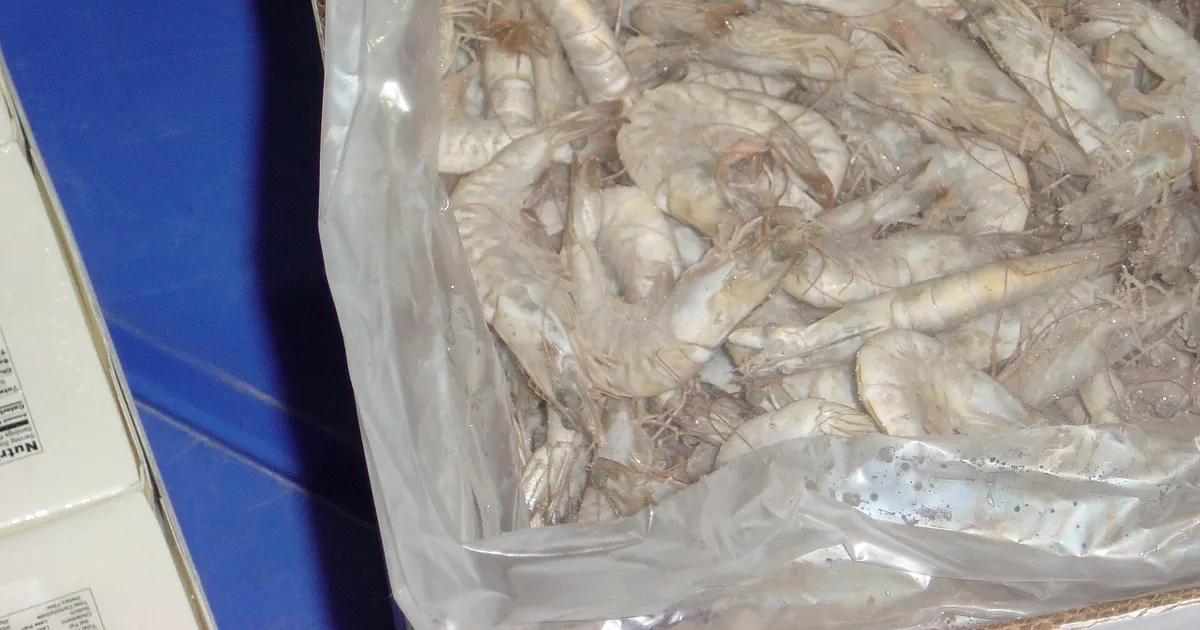
A shrimp quote that says only “frozen” leaves out the most important physical fact about the product: how it was frozen. IQF, semi-IQF and block frozen shrimp can come from the same pond in the same week, yet they pack differently, carry different amounts of ice, portion differently in a kitchen and sit at different price points.
This guide explains the three formats in plain terms, shows where each one fits, and lists what to write in a request so a processor quotes the format you actually need.
What each format means
IQF means individually quick frozen. The shrimp pass through a tunnel or spiral freezer on a belt, each piece frozen separately in a stream of very cold air. Plants usually run these freezers at about minus 35 to minus 40 degrees Celsius, and the target is a product core temperature of minus 18 degrees Celsius or colder when the shrimp leave the machine. A fine mist or dip applies a thin glaze afterwards. The result is loose shrimp that pour out of the bag one at a time.
Block frozen means the shrimp are laid in a rectangular pan, covered with water and frozen into a solid slab. A common pack is a block of about 2 kilograms, with several blocks in a master carton. The water between the shrimp is part of the block, so you thaw the whole block to use any of it.
Semi-IQF sits between the two, and this is where definitions drift from plant to plant. In most Vietnam offers it describes shrimp frozen in layers on a tray with a light glaze, so the pieces are lightly bonded but can be broken apart into portions. Some plants use the same word for shrimp frozen in a pan with a very small water addition. Because the meaning is not fixed by a standard, always ask the plant to describe it in one sentence and write that sentence into the spec.
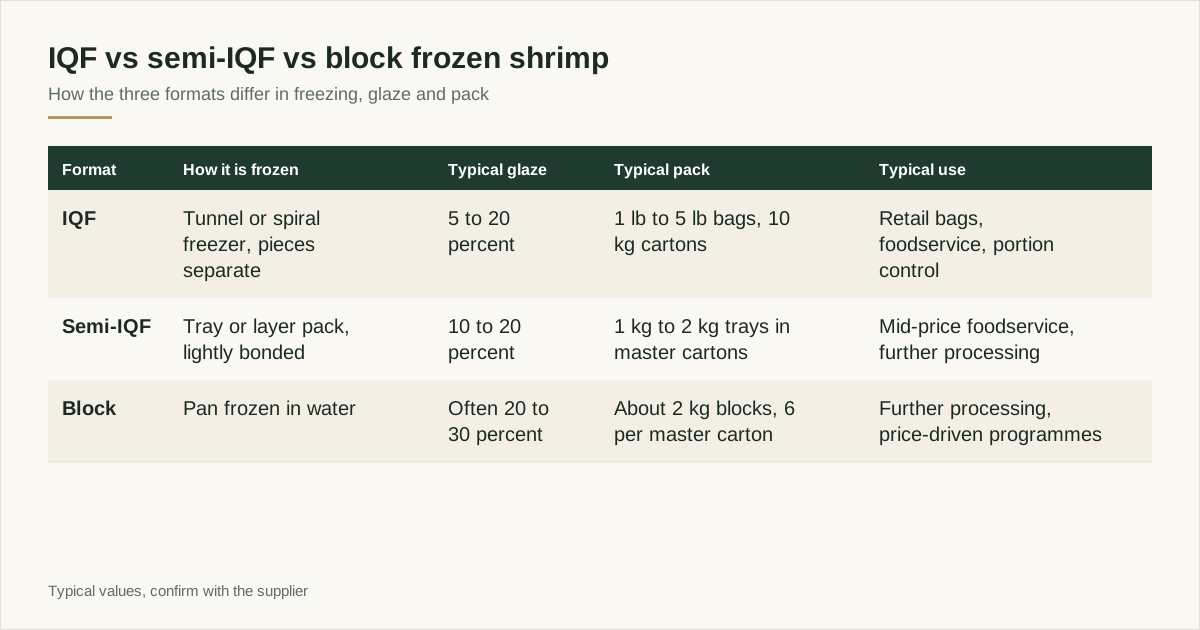
| Format | How it is frozen | Typical glaze | Typical pack | Typical use |
|---|---|---|---|---|
| IQF | Tunnel or spiral freezer, pieces separate | 5 to 20 percent | 1 lb to 5 lb bags, 10 kg cartons | Retail bags, foodservice, portion control |
| Semi-IQF | Tray or layer pack, lightly bonded | 10 to 20 percent | 1 kg to 2 kg trays in master cartons | Mid-price foodservice, further processing |
| Block | Pan frozen in water | Water block, often 20 to 30 percent | About 2 kg blocks, 6 per master carton | Further processing, value-add, price-driven programmes |
The figures above are typical ranges from plant offers, not promises. Confirm each one with the supplier for your own spec.
Why the freezing format changes the price
Freezing format moves cost in three places. Equipment is the first. A spiral freezer costs far more to run than a block freezing room, and the plant recovers that through the price per kilogram. Labour is the second. IQF lines need sorting, grading and a belt operator who removes defects, while blocks are packed by hand in pans. Yield is the third. A block carries a large water share, so the kilograms you pay for include shrimp and ice together.
This is why a block quote often looks cheaper on a per-kilogram basis and then ends up more expensive per kilogram of edible shrimp. The same arithmetic applies to glaze on IQF, which is covered in the guide on glaze, net weight and yield. Always compare quotes on net weight after deglazing.
When IQF is the right choice
IQF suits any buyer who wants control over the portion. A restaurant opens a bag, takes out the shrimp it needs for the shift and reseals the rest. A retail brand fills a 1 lb or 2 lb bag with a count that is easy to check at the shelf. A prepared-food plant feeds loose shrimp into a line without thawing a slab first.
IQF also protects shape. Because the shrimp freeze apart, they stay straight or curled the way they came off the sorting table, and the cosmetic look at the bag window matches the grade on the carton. Premium retail programmes in the United States and the EU almost always specify IQF for this reason.
The weak point is glaze management. An IQF line applies the glaze as a fine layer, and small differences in dwell time change the percentage by several points. State the glaze you accept as a range, such as 10 percent with a tolerance, and ask for the plant’s own deglazing test method.
When block frozen still makes sense
Block remains common where the shrimp will be thawed in bulk anyway. A plant that cooks, breads or peels shrimp for further processing thaws a whole block at once, so portioning gives no benefit. Block packs also cost less to freeze and handle, and they tolerate a longer cold chain because the water block insulates the shrimp.
Two risks need attention. The first is clumping of defects inside the block, because you cannot see a soft or broken shrimp in the middle of a slab until you thaw it. The second is net weight. A 2 kg block that includes 25 percent water holds only about 1.5 kg of shrimp, so the label weight and the shrimp weight differ more than on IQF.
If you buy block for further processing, agree on the net weight method before the first order and test the first container in your own lab.
Where semi-IQF fits
Semi-IQF suits buyers who want something between portion control and block pricing. The pieces break apart enough for foodservice use, and the plant avoids the slower belt time of a full IQF line. It works well for mid-price foodservice programmes and for buyers who repack in their own country.
The risk is ambiguity. Two plants can quote “semi-IQF” at the same price and ship two different products. Settle three points in writing: how many pieces bond together, the glaze range and the pack format. A plant that answers these quickly usually runs the format routinely.
Ready to price this spec? Get matched with a shrimp supplier
Storage and transport rules that apply to all three
Format does not remove the need for a stable cold chain. Frozen shrimp should travel and store at minus 18 degrees Celsius or colder. Temperature swings cause dehydration, freezer burn and glaze loss, and they hit IQF harder than block because a thin glaze offers less protection than a water slab.
Ask for the container temperature log from the plant to the port and look for steady readings. Carton marking should show the production date and the batch code so you can trace a problem back to the lot. The guide on shrimp processing forms explains how head-on, headless and peeled forms interact with these freezing choices.
How to check the format on arrival
A format claim is easy to write and easy to test. Pull three cartons from different pallet positions when the container opens and run the same short check on each one.
First, look at the frozen product before it moves. IQF shrimp should lie loose with a thin, clear glaze and no ice crust at the bottom of the bag. A white frosty layer inside the bag points to temperature swings in transit. Second, tap the bag on a table. IQF pieces separate, semi-IQF pieces break into small groups and block product stays a slab. Third, weigh a frozen sample, deglaze it under cool running water until the ice layer is gone, drain for a fixed time and weigh again. Record the glaze percentage and the count per pound of the deglazed shrimp.
Keep the three results in one sheet with the lot code from the carton. If the format differs from the spec, you have a dated record to send to the plant, and the plant can compare it with its own freezing and packing logs for that lot.
How format interacts with size and processing form
Format and size grade pull on each other. Very small shrimp, such as 71/90 and below, often run as block or layer pack, because individual quick freezing of tiny pieces gives a poor return on belt time. Large shrimp, such as 16/20 and above, are usually IQF because the buyer wants each piece to look right on the plate and the plant can sort them cleanly on a belt.
Processing form changes the picture again. Head-on shrimp freeze in a block or a layer pack more often than peeled shrimp because the long antennae and heads make belt freezing awkward. Peeled and deveined tail-on shrimp almost always run as IQF. The size grade guide, how shrimp size grades set your price, explains the counts and how each step up the ladder changes cost.
When you request a quote, give the size grade, the processing form and the freezing format together. A processor can then tell you whether the combination is normal for its lines or needs a special run, and a special run may mean a higher minimum order or a longer lead time.
What to write in the request
A processor can quote you accurately only when the request fixes the format. Use these lines.
- Freezing format: IQF, semi-IQF or block, with a one-sentence description for semi-IQF.
- Glaze: target percentage and tolerance, quoted on net weight after deglazing.
- Pack: bag size, number of bags per master carton and carton net weight.
- Core temperature at loading: minus 18 degrees Celsius or colder.
- Size grade and processing form, written the way your market writes them.
- Test method: how you will check glaze and net weight on arrival.
Next step
Decide which of the three formats your customer needs on the shelf or in the kitchen, then write the six lines above into one request. Send your spec through the request form and we match you with up to 3 Vietnam processors that run that format. They reply within 24 business hours, and you compare their offers on the same net weight basis.
Frequently asked questions
What does IQF mean on a shrimp carton?
IQF stands for individually quick frozen. Each shrimp is frozen separately in a tunnel or spiral freezer, so the pieces stay loose in the bag and you can pour out the exact portion you need. The label says nothing about size, glaze or processing form, so those still need their own lines in the spec.
Is block frozen shrimp lower quality than IQF?
Not by itself. Block freezing is an older, cheaper format that packs shrimp and water into a solid slab. Quality depends on raw material, handling time and storage temperature. A block is harder to portion and carries more water, which is why many retail and foodservice buyers moved to IQF.
How do I check that a carton is really IQF?
Open a sample carton frozen and look for loose single shrimp with a thin, even glaze. Large clumps, a solid ice layer at the bottom of the bag or shrimp fused together signal that the product thawed and refroze or was frozen in a block. Ask the plant for freezer type and core temperature records.
Ready to price this spec?
Send your species, size grade and certificate list. We match you with up to 3 Vietnam processors and reply within 24 business hours.
Get matched with a shrimp supplier